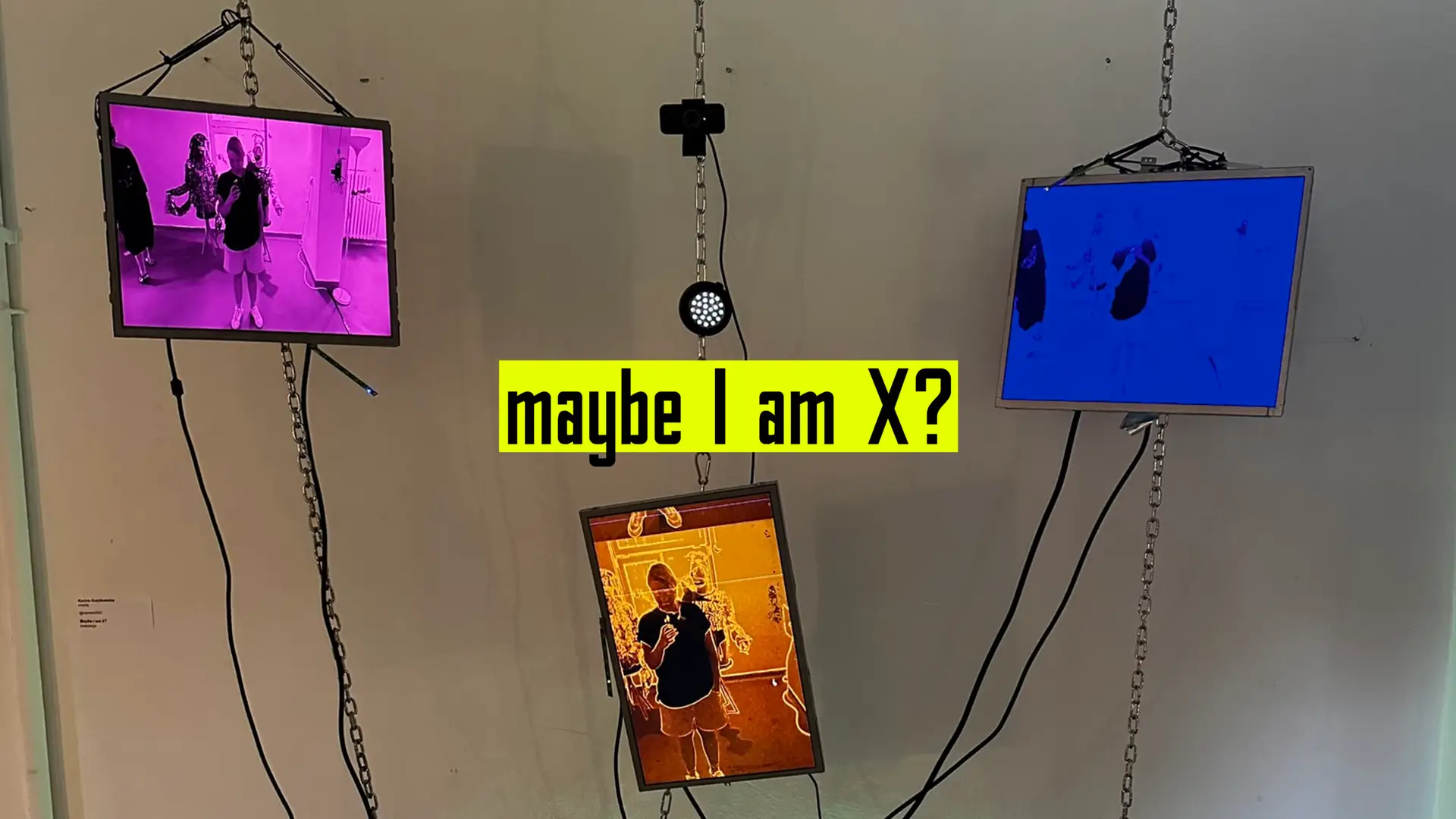
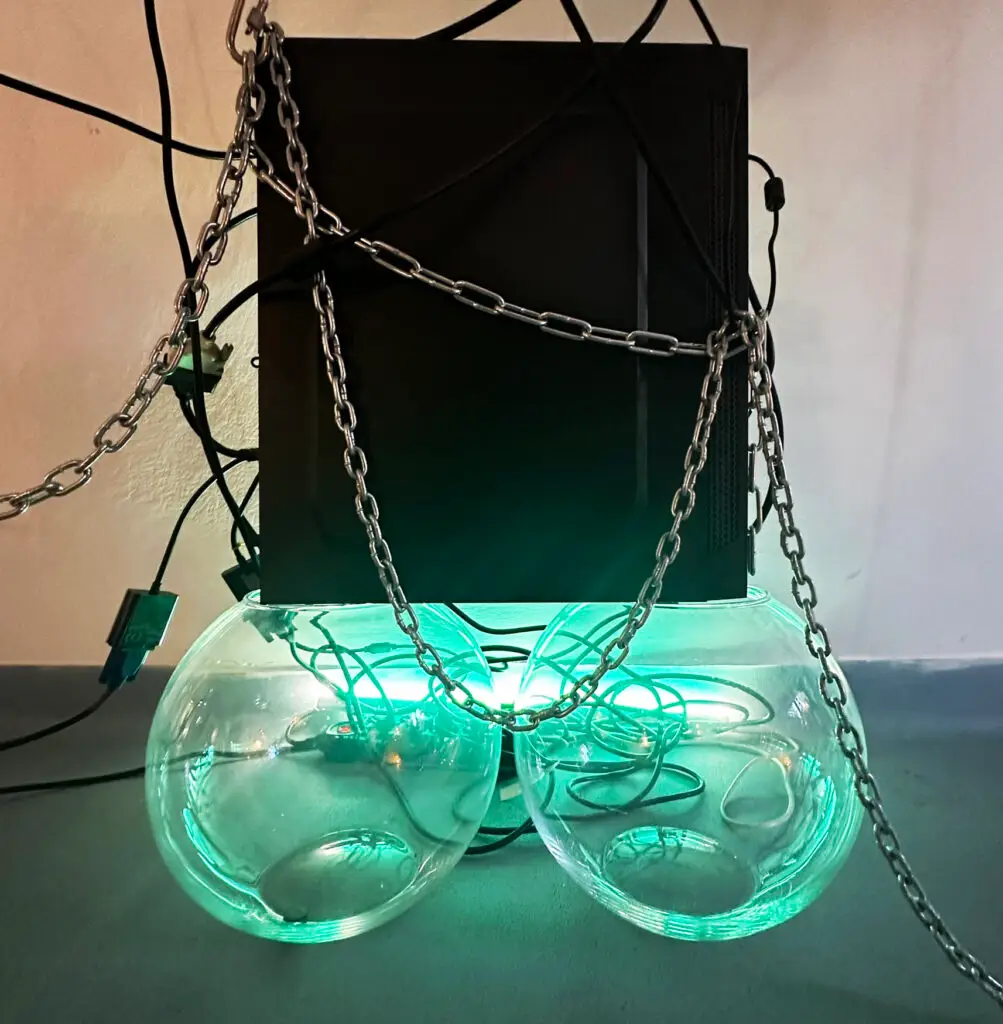
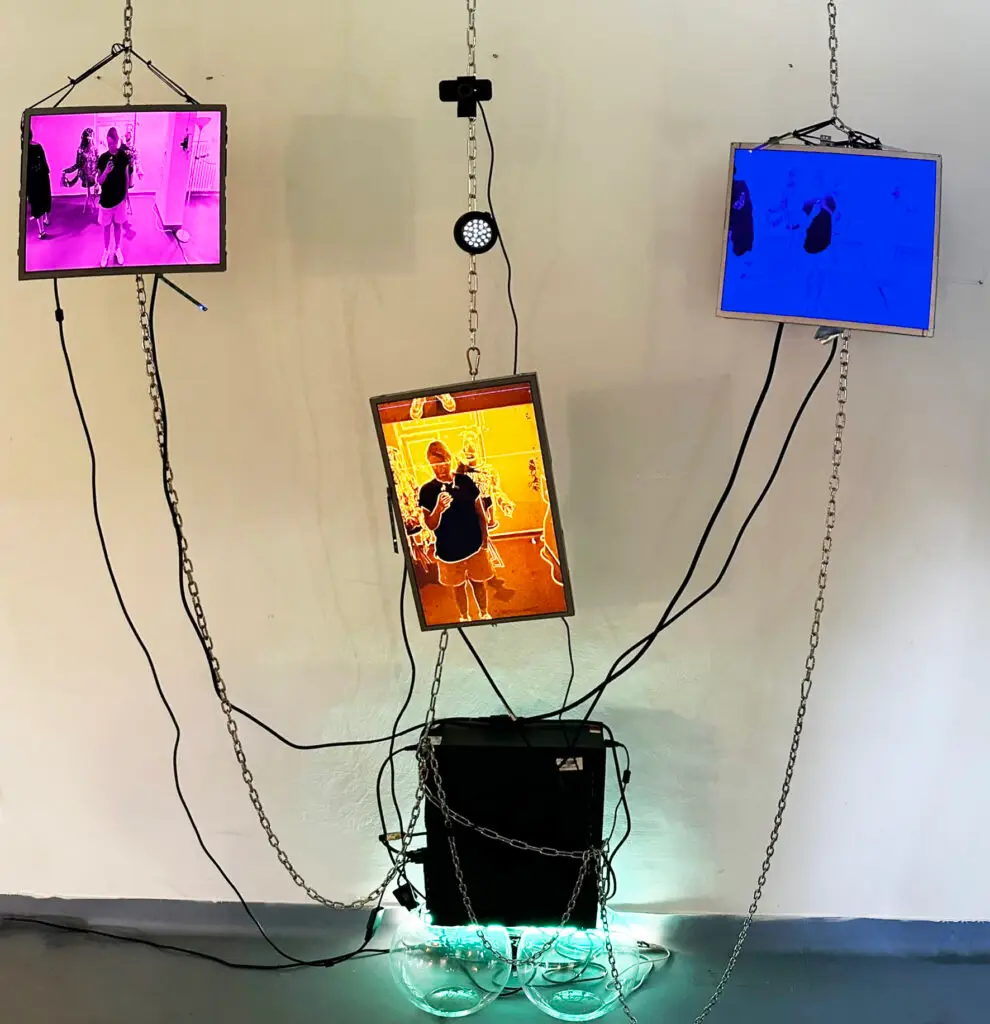
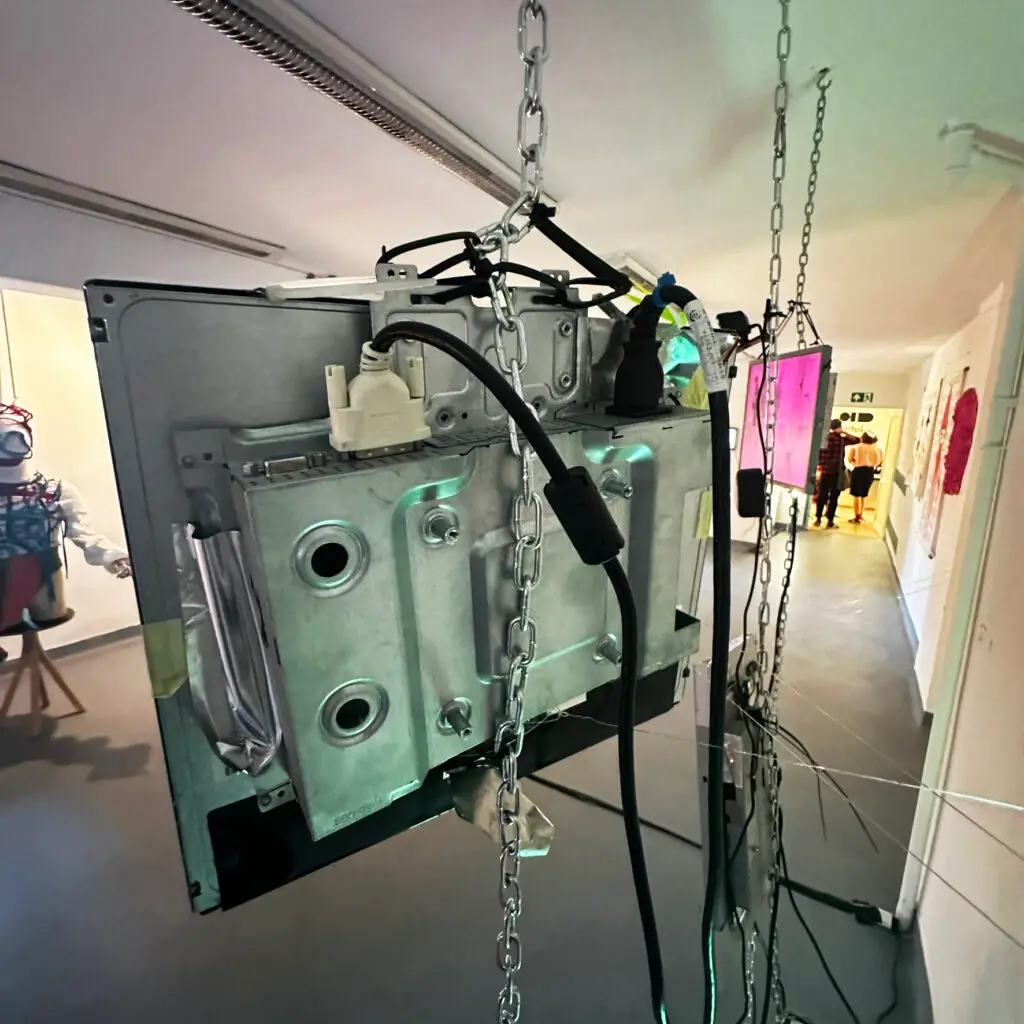
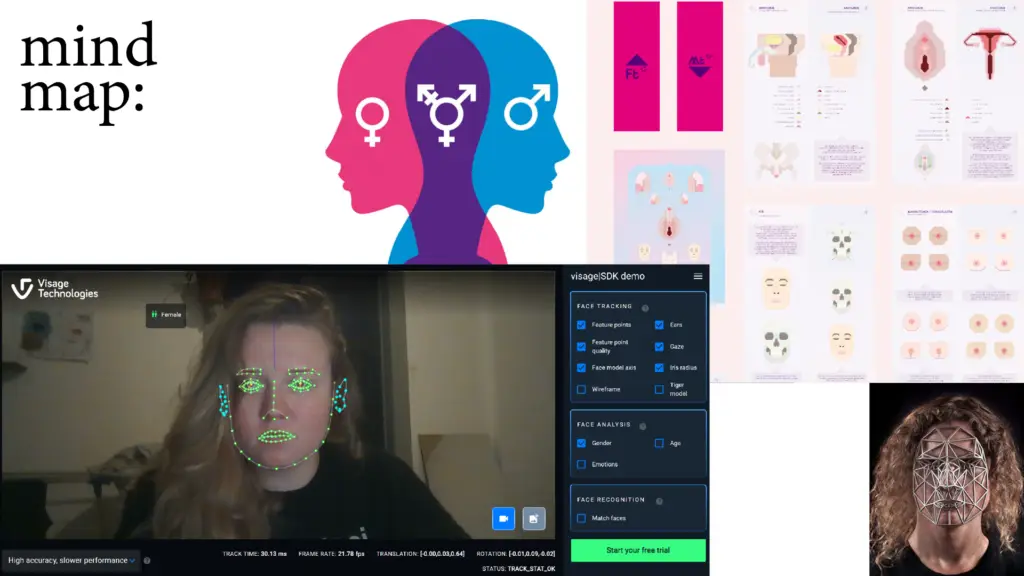
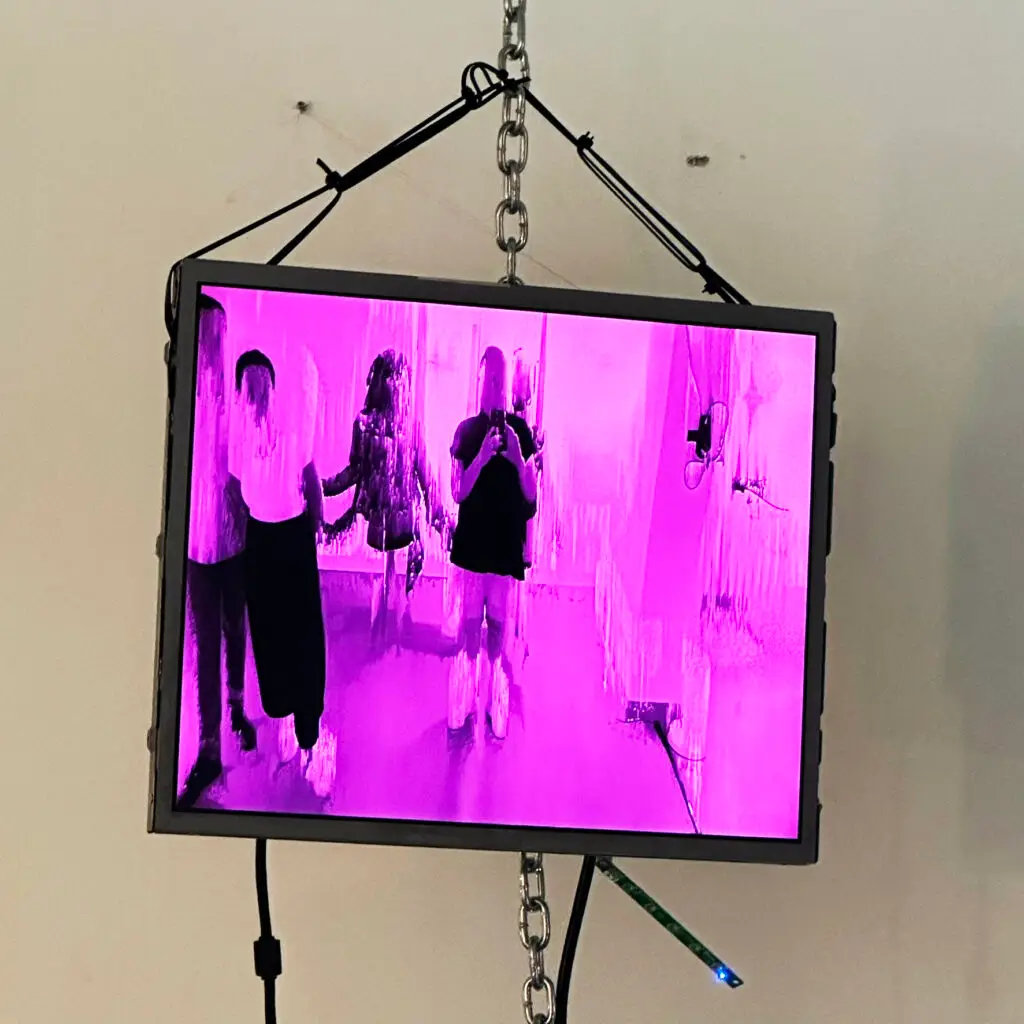
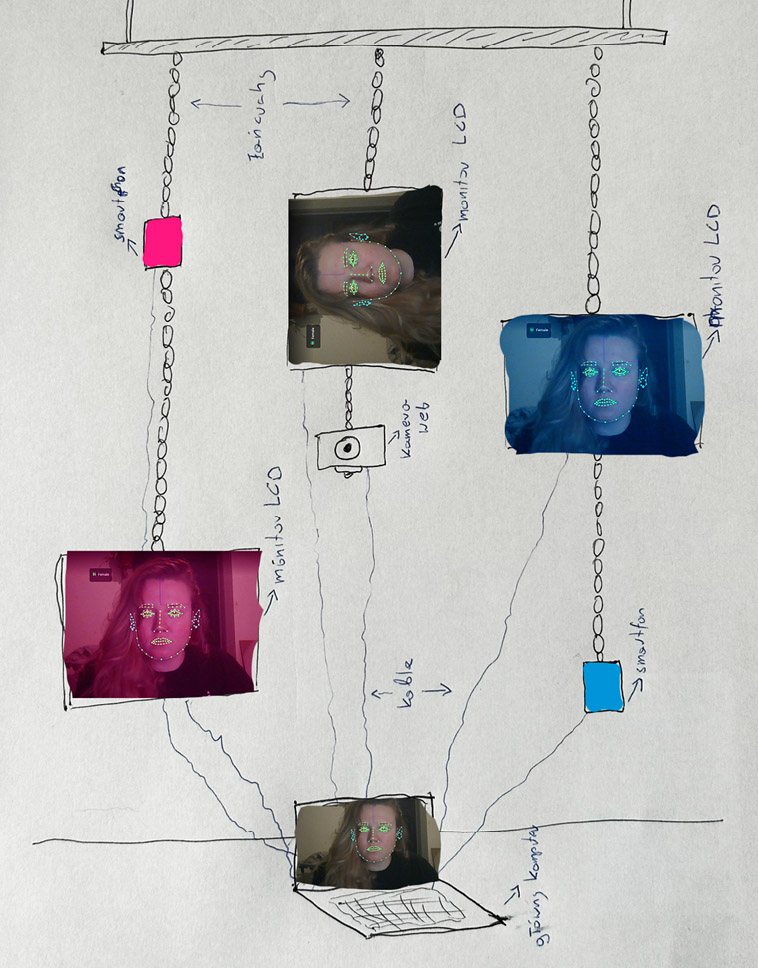
Instalacja badająca płynność tożsamości płciowej i arbitralność binarnych podziałów społecznych. Praca składa się z trzech pionowych kolumn zbudowanych z ekranów LCD. Kamera internetowa przechwytuje postać osoby stojącej przed nią, a użyty software przetwarza ją w czasie rzeczywistym, generując trzy równoległe wersje portretu. Lewa kolumna przedstawia wersję sfeminizowaną o różowym zabarwieniu, prawa — wersję zmaskulinizowaną o niebieskim zabarwieniu, a centralna — wersję niebinarną, łączącą cechy kobiece i męskie w niestabilnym obrazie. Instalacja zachęca do refleksji nad własną tożsamością, a także nad sztywnością społecznych kategorii płci. Instalacja staje się nie tylko lustrem, ale także narzędziem dezintegrującym binarne schematy, proponując przestrzeń na queerową interpretację ciała i jego reprezentacji.
EN
ℍ𝕠𝕨 𝕞𝕒𝕟𝕪 𝕥𝕚𝕞𝕖𝕤 𝕒 𝕕𝕒𝕪 𝕕𝕠 𝕪𝕠𝕦 𝕥𝕒𝕜𝕖 𝕒 𝕤𝕖𝕝𝕗𝕚𝕖? 𝟙𝟘𝟟𝟚?
The photo booth, as an automated device that captures and instantly prints images, was established in 1925. It initiated a simple ritual: enter, pose, print. In 1982, Michel Foucault wrote about „technologies of the self”—practices through which individuals act upon their own bodies, images, and identities to shape themselves. In the era of filters, deepfakes, and avatars, however, this process is undergoing a profound transformation. The self-image becomes fluid, unstable, and infinitely editable. In this work, the act of shaping the „self” is partially surrendered to artificial intelligence and current trends.
A camera captures the participant’s likeness, which is then subjected to deformation via AI (ComfyUI). The prompts driving the image transformation are derived from Google Trends, serving as a record of collective fascinations, fashions, and cultural tensions. Upon pressing the button, the image is saved to a digital archive, expanding the database. Drawing on Foucault’s theory, the body and image are filtered through an algorithm, and the selfie becomes an act of entrusting one’s own image to the machine. Perhaps this is what the modern mirror looks like today: built of pixels, devoid of glass, but with the limitless possibilities of code.